Rorbuer Architecture & Maritime Heritage
Reine is an active trading and fishing port dating back to 1743. The iconic red timber cabins called rorbuer were originally built on wooden stilts directly over the tidal shoreline to accommodate seasonal fishermen who traveled hundreds of nautical miles each winter for the Arctic cod run (Lofotfisket).
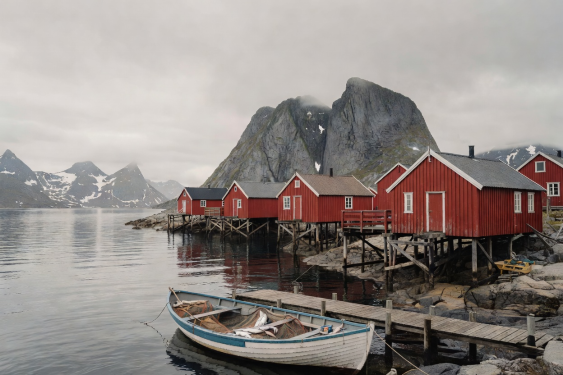
The distinctive crimson red paint used on the rorbuer was historically created by blending cheap fish oil with iron oxide pigment, while wealthier merchants painted their homes in costly white lead paint. Today, these cabins have been meticulously restored to offer travelers authentic immersion into traditional Norwegian coastal life.
Stockfish Drying & The Arctic Wind Cure
From February to May, millions of Atlantic Skrei cod are cleaned, tied in pairs, and hung across wooden drying racks (hjell) that frame the village perimeter. Because winter temperatures in Lofoten hover right around freezing with constant ocean salt breezes, the fish dries naturally without rotting or freezing solid—producing world-class tørrfisk.
Arctic Trail Notes & Scenic Points
1. Reinebringen Sherpa Stairway
A challenging ascent via 1,560 stone steps constructed by Nepalese Sherpas, rewarding climbers with one of the most famous panoramic vistas on earth: Reinefjorden, Hamnøy, and Sakrisøy spread out below.
2. Reinefjorden Ferry to Vindstad & Bunes Beach
Take the local passenger ferry deep into the fjord to hike the historic pass over to the wild, white sands of Bunes Beach facing the open Norwegian Sea.