Origins of the Peat Canal Network
Giethoorn was established in the 13th century by Flagellants and peat diggers. The original settlers uncovered hundreds of wild goat horns preserved in the marshy bogs—remnants of a massive flood in 1170—giving rise to the village's original name, Geytenhorn (Goat Horn).
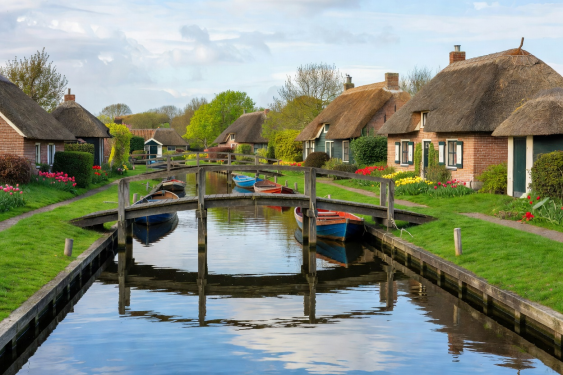
As peat cutters dug extensive trenches to extract turf for fuel, they created wide waterways and artificial lakes (Wieden). Farmhouses were subsequently constructed on private peat islands, accessible only by high-arched wooden bridges built high enough to allow loaded peat punts (punter boats) to glide underneath.
Thatched Architecture & The Silent Whisper Boat
The farmhouses in Giethoorn are built in the traditional boerderij style with steep reed-thatched roofs harvested directly from the Weerribben marshlands. Reed provides natural insulation against damp northern winters while imparting the signature organic aesthetic to each island compound.
Exploration Notes: On Foot & By Punter
1. Binnenpad Footpath Walk
The primary pedestrian trail meandering along the Dorpsgracht canal, passing historical canal museums like Museum Giethoorn 't Olde Maat Uus, which recreates 19th-century farm life.
2. Weerribben-Wieden National Park Loop
A 15-kilometer water route navigating through the largest continuous peat bog wetland in northwestern Europe, home to otters, cormorants, and rare water lilies.